


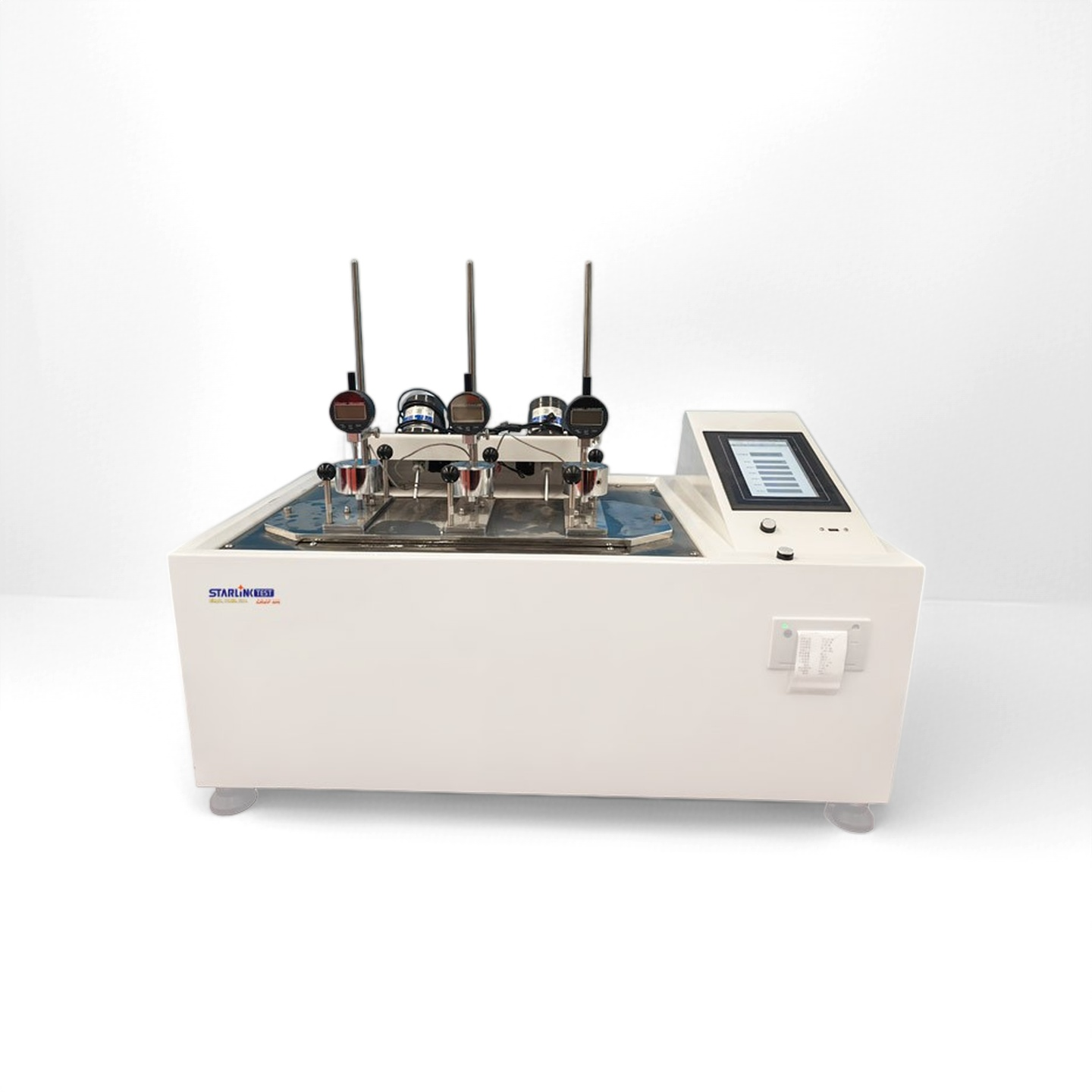
HDT/Vicat Tester
Model: SL-V031
Number of Stations: 3
Temperature Range: RT- 300°C
Heating rate: 50℃/h, 120℃/h, any other rate can be selected between 3-120℃/h.
Deformation measuring range: -1.00 - 9.00mm
Loading method: Electric
Standards: ISO 75, ISO 306, ASTM D1525, ASTM D648 and other equivalent standards.
“HDT” test means
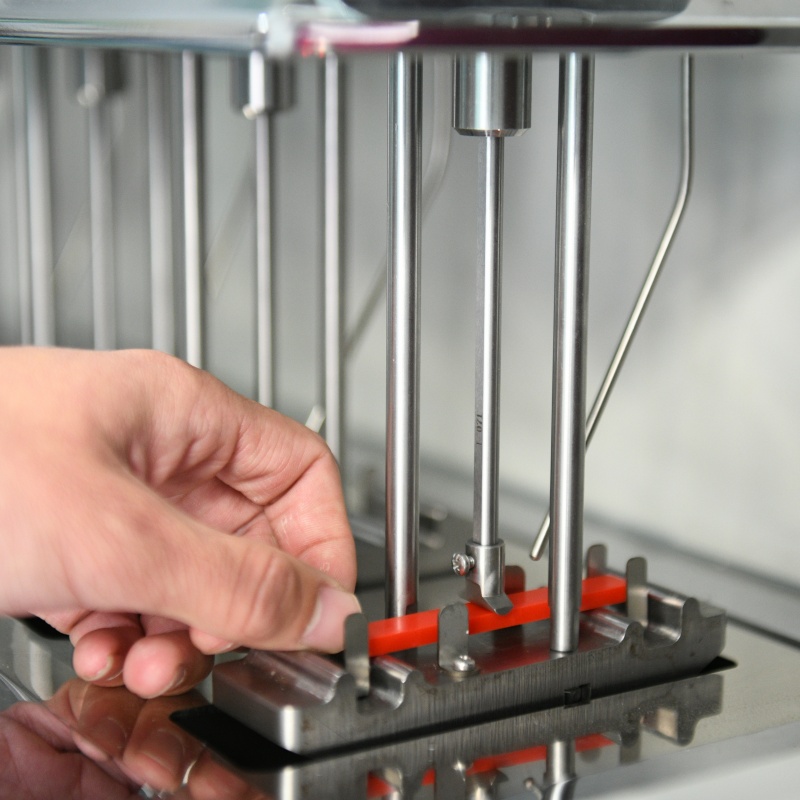
The test determines the temperature at which a specified deflection occurs when a standard test specimen is subjected to a bending stress, to produce one of the nominal surface stresses according to international standards. This test is important for both quality control and research into plastics.
“VICAT” test means
The test determines the temperature at which a standard indenter penetrates 1mm into the surface of a test specimen under load. It is used to establish the difference between many types of thermoplastic materials with regard to their softening properties.
Features:
Touchscreen control
Motorized (electrically driven) specimen stage lift
Multi-point temperature measurement / Multi-point temperature sensing
| Delivery time | Certificate | Whether customization is accepted | MOQ | Packaging information |
| 10 days | CE | No | 1 unit | 1 pc |
FAQ
Q: Can this machine simultaneously perform heat deflection temperature (HDT) and Vicat softening temperature tests?
A: No. These two tests have completely different requirements for heating rate and test methodology, so they cannot be carried out simultaneously on the same machine.
Q: What type of dimethyl silicone oil is required for this equipment?
A: It can be selected according to the softening temperature of the material being tested. Generally, dimethyl silicone oil with a flash point of 300 °C is recommended, and the viscosity should be maintained within 100 cSt.
Q: How often should the dimethyl silicone oil be replaced?
A: Regular inspection should be conducted based on the frequency of use. It is advisable to observe the condition of the test medium periodically. If the dimethyl silicone oil shows signs of degradation (e.g., darkening, turbidity, or unusual odor), it should be replaced promptly. Under normal usage conditions, replacement every six months is generally recommended.
Q: Does your equipment come with a cooling function?
A: The equipment itself does not include a built-in cooling function, but it is pre-equipped with reserved interfaces for connecting an external chiller.
Q: Will there be significant oil fume/smoke generated during the test?
A: It is recommended to use high-quality dimethyl silicone oil. Slight oil fume may be generated during the test, so a fume hood or exhaust canopy should be installed above the equipment in the laboratory.
Product Inquiry