


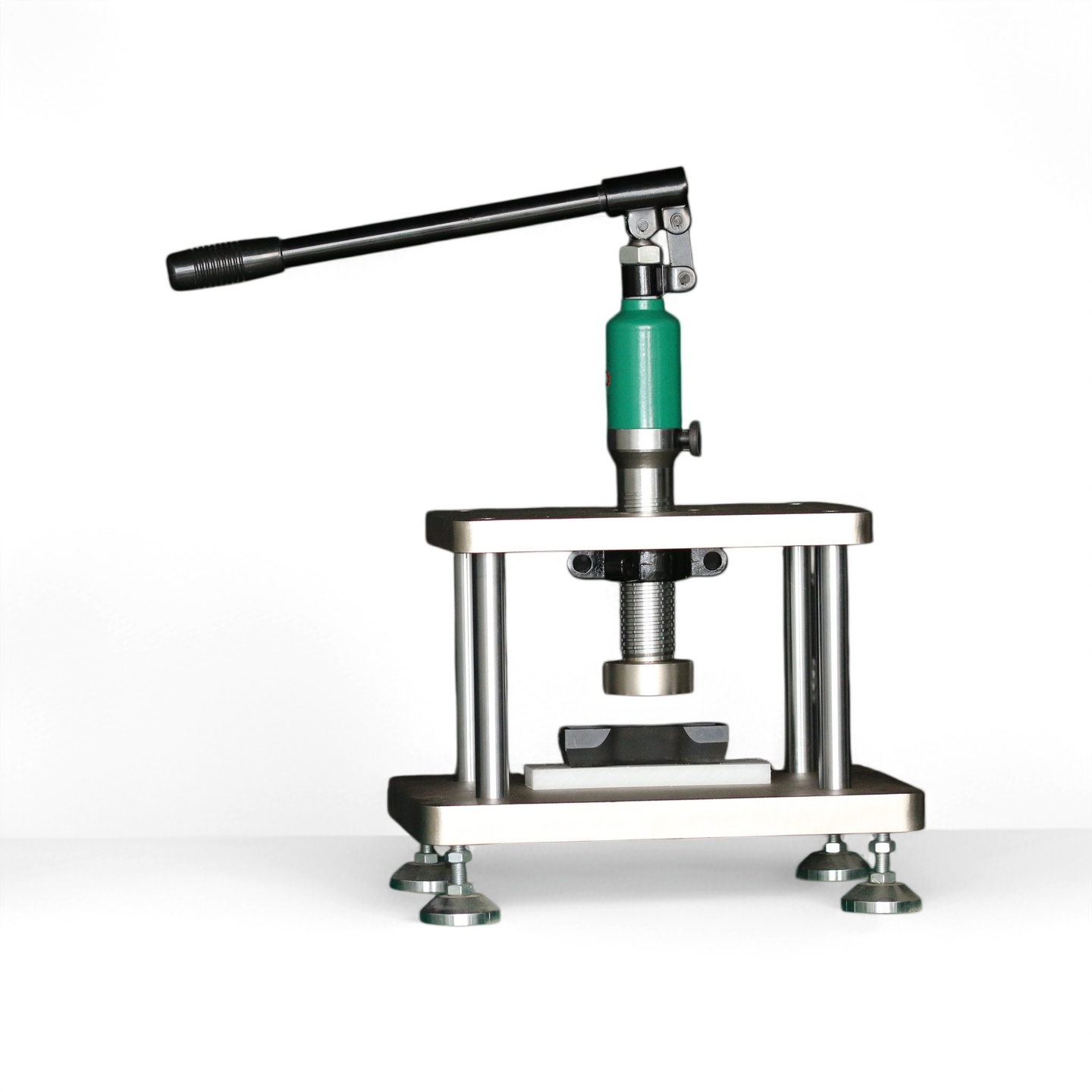
Manual punching machine
Model: SL-P10
Maximum force: 50kN
Stroke: 50mm
Tip diameter: 70mm
Working space height: 60mm
Overall Dimensions: 350×250×550mm
Net Weight: 50kg
Working Principle:
Through the reciprocating motion of the handle, the hydraulic oil inside generates high pressure, which drives the piston rod to extend linearly. As a result, a significant force is exerted against the mating die, ensuring smooth and even punching of the material specimen.
Features:
Specimen preparation becomes easy and labor-saving. After the punching is completed, simply loosen the return valve slightly (counterclockwise), and the piston rod will automatically retract to its original position.
Usage: Suitable for punching rubber, plastic, film, leather, and other special materials into various standard test pieces for use in material testing machine specimen preparation.
| Delivery time | Certificate | Whether customization is accepted | MOQ | Packaging information |
| 7 days | CE | Yes | 1 unit | 300*400*600mm,60kg,1 pc |
FAQ
Q1 : How to operate the punching machine correctly?
A: Place the material to be punched (rubber, plastic, film, leather, etc.) flat on the workbench, positioned between the die and the workbench surface. Tighten the return valve clockwise, then repeatedly press the handle until the punch completely penetrates the material. After punching, slightly loosen the return valve counterclockwise, the piston rod will automatically retract, and then remove the specimen.
Q2: What should I pay attention to when punching materials of different thicknesses?
A: For thicker or harder materials, press the handle slowly and evenly to avoid impact loads that could damage the die or equipment. It is recommended to perform a test punch on a small area first to confirm that the die is sharp and the equipment pressure is sufficient. For thin and soft materials (such as film), place a layer of backing paper underneath to obtain cleaner cuts.
Q3: What is the maximum material thickness and hardness that can be punched?
A: The maximum punching thickness depends on the material type. In general, rubber ≤5mm, plastic ≤3mm or more are recommended. For high-hardness materials, punching difficulty increases significantly; a test punch is recommended to determine feasibility. The maximum output force is approximately 50 kN.
Q4: Does the die need maintenance?
A: Yes. The cutting edges of the die should remain sharp and clean, and avoid impact with hard objects. If you notice increased burrs or uneven cuts on the punched edges, the die has become dull and needs to be sharpened or replaced. After use, the die should be coated with anti-rust oil for storage.
Q5: What safety precautions should be taken during operation?
A: Keep hands away from the punching area during operation to avoid crushing injuries. Do not place hard metal objects on the workbench for punching. Do not insert any part of the body into the working space while the equipment is in operation.
Product Inquiry