


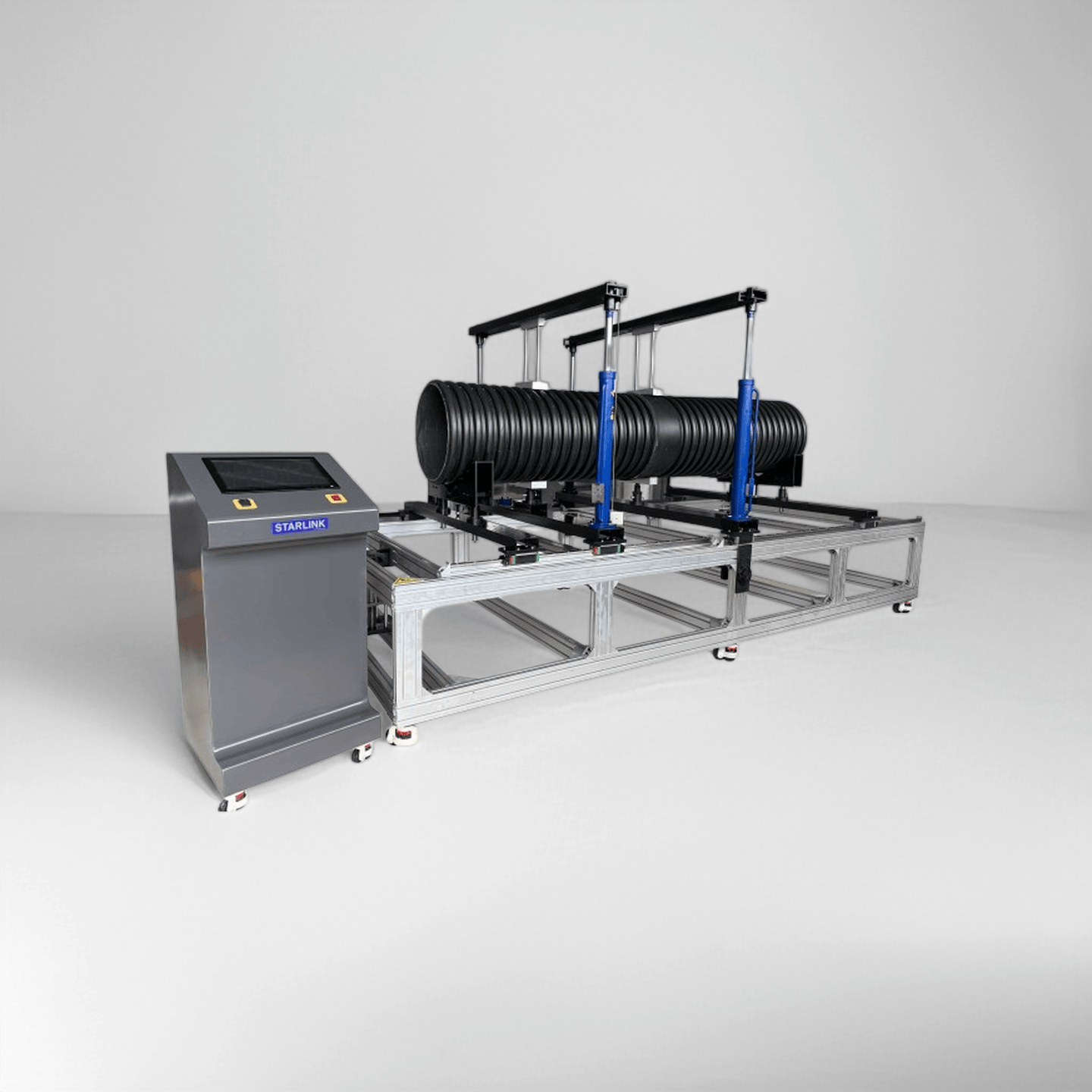
Piping System Joints Leak tightness Tester
Model: SL-GC500/1000
Pipe diameter: 160-1000mm
Test station: 1
Pressure range (Water pressure ): 5-50kPa
Pressure range (Negative pressure): 0-(-30)kPa
Pressure display accuracy: 1 kPa
Max. angle of deflection: 3°
Power supply: 220(1-15%)VAC~220(1+10%)VAC,50Hz
Standards: ISO 4422-2, ISO 13844, DIN EN 1277 and the equivalent.
Features:
The pressure control console can be used for tests under both negative pressure and low water pressure, helping to save laboratory space.
The acquired data can be quickly transferred to the user's computer via a USB interface for subsequent analysis and report generation.
Air cushions are used for sealing the specimen, which facilitates operation, improves efficiency, and reduces costs.
The electro-hydraulic device is designed to apply a constant deformation to the cross-section of the pipe.
The test equipment is available in two models. The model for pipes up to 500 mm in diameter is specifically designed for small-diameter testing, while the model for pipes from 600 mm and above is intended for large-diameter testing. Both ensure convenience and speed in operation.
Application fields: Plastic pipe manufacturers, testing laboratories, and research institutes.
| Lead time | Certificate | Customization Options | MOQ |
Within 90 working days | CE | Special customization accepted | 1 unit |
Piping System Joints Leak Tightness Tester FAQ
I. Standards and Scope
Q1: Which standards does this equipment comply with?
The equipment complies with ISO 4422-2, ISO 13844, DIN EN 1277, and the corresponding Chinese national standard GB/T 39383.
Q2: Which piping systems are applicable?
Applicable for determining the leaktightness of elastomeric sealing ring type joints for buried thermoplastic non-pressure piping systems, including single sockets, double sockets, and sockets of fittings of PVC-U.
Q3: What are the test pressures?
The standard specifies three basic test pressures:
- p1: internal negative air pressure (partial vacuum);
- p2: a low internal hydrostatic pressure;
- p3: a higher internal hydrostatic pressure.
The applicable selection of test pressures shall be specified in the referring standard.
II. Test Conditions and Principle
Q4: Under which test conditions is the test performed?
The standard specifies four test conditions:
- Condition A: without diametric or angular deflection;
- Condition B: with diametric deflection;
- Condition C: with angular deflection;
- Condition D: with simultaneous angular and diametric deflection.
The applicable selection of test conditions is specified in the referring standard.
Q5: What is the test principle?
A test piece consisting of a PVC-U pipe mounted into a PVC-U socket is exposed to specified negative internal pressures (partial vacuum) within a specified temperature range, while the pipe is subjected to angular deflection and deformation. During the test, the test piece is monitored for signs of leakage.
III. Equipment Functions and Features
Q6: What is the main purpose of this equipment?
This equipment is used to determine the leaktightness of elastomeric sealing ring type joints for buried thermoplastic non-pressure piping systems, verifying the sealing performance under negative pressure, angular deflection, and deformation conditions.
Q7: What are the main features of the equipment?
- Hydraulic type pipe deflection device at radial direction with high-precision digital gauge display;
- Angular deflection can be applied in four directions;
- Unique design for sample clamping system makes installation convenient;
- Test data can be exported to PC via USB interface for further processing and report generation.
Q8: What models are available?
The equipment is available in two models: the model for pipes up to 500 mm in diameter is specifically designed for small-diameter testing, while the model for pipes from 600 mm and above is intended for large-diameter testing. Both ensure convenience and efficiency in operation.
Product Inquiry